Tubbataha reef review or the meaning of being an underwater photographer
Jackie is clearly a better (topside) photographer than me so obviously when I bought my DSLR with the housing, I asked her to give me some advice on how to operate it. I wanted to have “plenty of practice” before I took it underwater and so I started playing with it, mostly under natural light. After struggling with a few techniques I wanted to master, I humorously told Jackie “I wish I could just see something, point the camera at it and shoot it” to which she wisely replied “Well, this is a DSLR. If you wanted a point-and-shoot camera you should have bought just that.” Genius.

So I spent quite a bit more time practicing the setups, reading all the underwater photography books I could get my hands on and talking to people who I thought could give me advice. Internet forums were helpful, uwphotographyguide.com was very important but I guess, based on my experience, the real cornerstone was the book “The Underwater Photographer” by Martin Edge. In his book, he stresses the definition of “peak of the action”, which I’ll try to define in my own terms: during a dive, you spend a lot of time just looking around, searching for interesting subjects, photo moments, etc. All of a sudden, there it is. All the travelling, all the equipment, the preparation, the checking will boil down to the pics you are able to take of this subject. It could be a shark, a giant manta, a ghost pipefish, a blue-ringed octopus, a bobbit worm, a bobtail squid, mandarin fish mating…you found it! For me, that’s the moment my gas consumption may skyrocket, but it doesn’t matter, does it?

Most people today have at least a compact camera to bring underwater when they go on a dive trip. They want to bring home the only thing divers are supposed to – photos of what they saw. They are not specifically careful with their equipment; there is usually no planning and practicing to shoot what they expect to see; they may be amazing topside photographers but definitely have never read any underwater photography books. So they shoot away, merrily. They get some pics showing where they have been and what they saw. And that’s good enough.

Amateur as I may be, I would like to say that an underwater photographer is different from a diver with a camera. When I go underwater, the photos are the purpose of the dive. I enjoy editing, choosing and posting the photos just as much as I enjoy the dives. Sometimes more. I remember how I loved seeing some of the pictures I took on mediocre dives with bad visibility, or how much I have pushed my tank of air to the limit to be able to shoot an interesting subject which is now one of my favorite photos.
And so comes the time to review Tubbataha. It is a truly beautiful place, 1300 square kilometers (!) of reef, all of which you can dive for only around 10 weeks a year because of its rough waters. It is a Unesco heritage site with an incredible diversity of sea species. The dives were beautiful; visibility was on our side (although I heard it may not always be the case); the sun was up, so natural light was great…but the stars of the show were not there. No “peak of the action”.
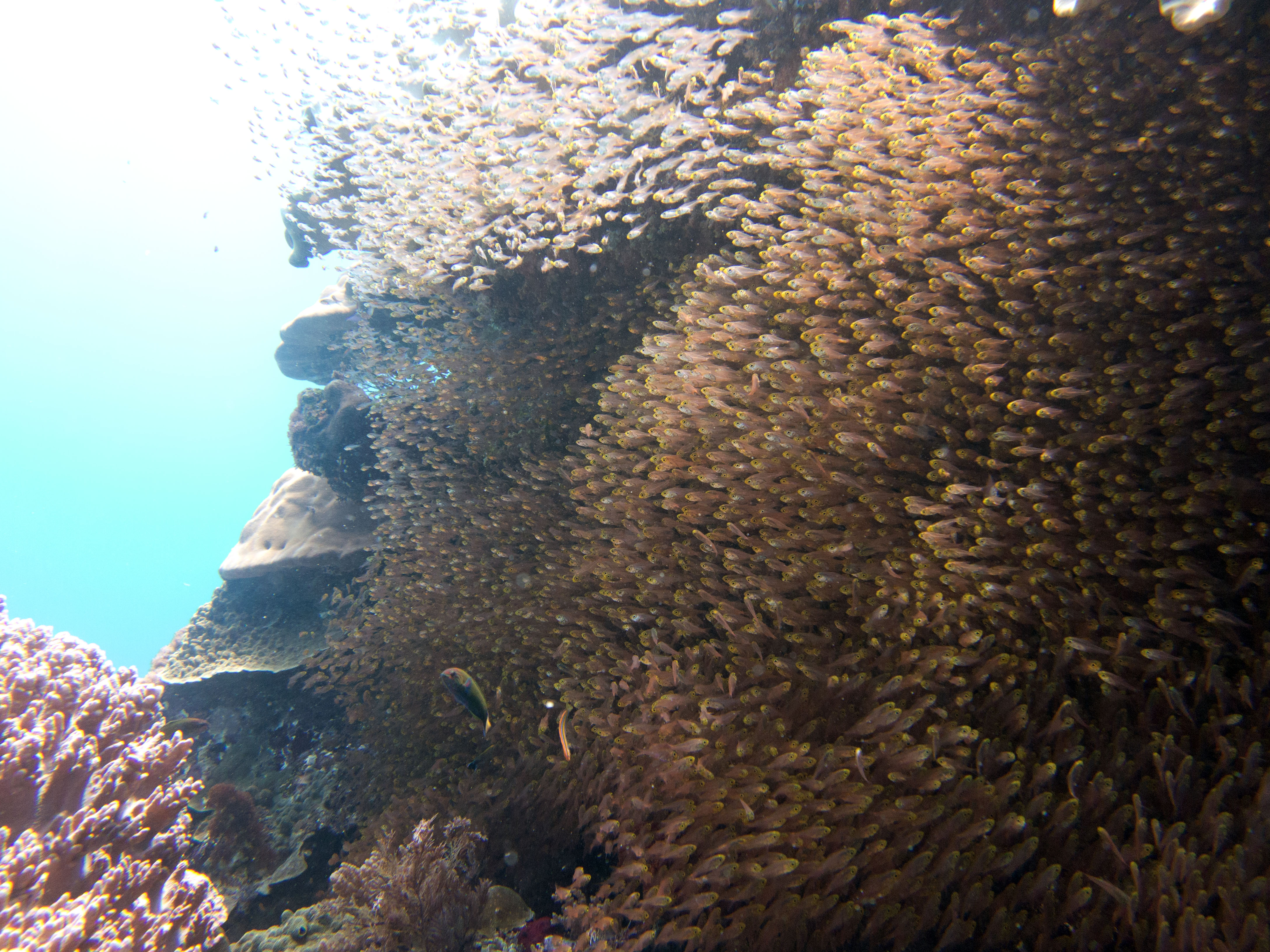
I had heard of Whale, Hammerhead, Tiger and Guitar sharks being relatively abundant there. We “spotted” a guitar shark and that was it. I didn’t get a chance to take a picture (although some people on the other dinghy did). The night dives were overlooked and underwhelming. Macro subjects were widely ignored. If there was ever a pygmy seahorse in Tubbataha, he had never seen a more peaceful life. I bet there are ghost pipefish there, why wouldn’t there be? There were no cleaning stations for mantas or sharks, which usually provide the best photo opportunities. My top shots in Tubbataha were of Lobsters, Turtles and schools of fish.

So, in conclusion I would say it’s a fantastic spot for a diver – with or without a camera. But it’s no more than a good place for an underwater photographer.
Leave a reply
Fields marked with * are required
Recent Comments